
9 GMO-Free Raw Honey Brands Compared by Origin and Flavour
Quick Summary
A gmo free raw honey describes the bees' forage, not how the honey was processed, so raw honey can still come from areas with nearby genetically modified crops. The strongest GMO-free claims rest on a named origin, a named producer and a describable forage landscape, not on a single label word.
- Raw describes processing, while GMO-free describes what the bees foraged on, so the two labels are not interchangeable.
- Bees forage several kilometres, so producers cannot control every flower in the area.
- Blended honey from many origins can hide the source, so single-origin honey offers a clearer chain to follow.
- Words like natural or pure say nothing about GMO status, so look for a stated origin and producer.
- Check each jar's origin, producer and processing statement together before trusting a GMO-free claim.
Table of Contents
- What GMO-Free Raw Honey Actually Means
- How GMO-Free Claims Are Checked and Where Honey Sourcing Breaks Down
- Raw Honey vs Pasteurised Honey: What Changes in the Jar
- Comparing Our Raw Honey Range: Origin, Flavour and Price
- How to Spot Fake or Mislabelled Honey
- How to Store Raw Honey So It Keeps Its Character
- Choosing the Right Raw Honey for Your Next Jar
- Frequently Asked Questions
What GMO-Free Raw Honey Actually Means
Last Updated: November 19, 2026
Most shoppers assume that raw honey is automatically GMO-free, but the two labels answer different questions, and a gmo free raw honey claim describes the bees' forage rather than the processing. Raw honey describes how the honey is handled after it leaves the hive, while GMO-free describes what the bees foraged on. A jar can be unheated and unfiltered and still come from a landscape where genetically modified crops are grown nearby.
At wildabouthoney, we source our honey directly from independent master artisan beekeepers in Greece and Portugal. Our range is described as free from GMOs, antibiotics and additives.
Raw honey is generally understood to be honey that has not been heated above the temperatures used in commercial processing, and has not been filtered to remove the natural pollen and particles. UK Food Standards Agency guidance on honey labelling sets out the baseline rules for what honey can be labelled as, which is a useful starting point when you compare jars on a shelf.
The phrase "GMO-free" is a sourcing claim, not a processing one. A gmo free raw honey tells you that the honey is not expected to contain material from genetically modified plants, which in practice depends on where the bees flew.
Watch out: a "natural" or "pure" label on its own says nothing about GMO status. Look for a stated origin and a producer who can describe the area their hives sit in.
How GMO-Free Claims Are Checked and Where Honey Sourcing Breaks Down
Checking a GMO-free claim is harder than checking a sugar content, because there is no simple chemical test that proves the absence of GMO pollen in a jar. Lab testing can help confirm purity, and you can read more in how lab testing is used to confirm honey quality. Most of the evidence comes from traceability: where the hives were placed, what the surrounding land is used for, and whether the producer can name the beekeeper. Lab testing can help confirm purity, but it is one part of a wider picture.
The weak point in honey sourcing is usually blending. Large volumes of honey are often combined from many origins to create a consistent taste and colour, and the label may name only the country of packing rather than the country of harvest. When that happens, the GMO-free status of the jar depends on every contributing source, and most shoppers have no way to see those sources.
European Commission rules on honey composition and origin labelling explains why origin can be stated loosely on some packs, which is worth knowing before you rely on a country name alone.
What a GMO-Free Claim Can and Cannot Establish
It helps to separate the different kinds of evidence a producer might offer, because they are not equally strong.
- A stated origin and named producer. This is the foundation. If the label names a region and the seller can identify the beekeeper, you have a chain to follow. If it names only the country of packing, you do not.
- A description of the forage landscape. A producer who can say the hives sit in wild scrub, traditional orchards or mountain pasture is telling you something concrete about what the bees were likely to reach. A producer who cannot describe the area is asking you to take the claim on trust.
- Supplier documentation. Reputable producers keep records of where each batch came from and how it was handled. You will rarely see these documents as a shopper, but a seller should be able to confirm they exist and describe what they cover.
- Laboratory testing. Testing can confirm purity, moisture content and the absence of certain residues. It is useful, but it is not a routine test for the presence of GMO pollen, and no lab result can prove a negative across every flower in a foraging range.
- Certification. Organic certification is the closest widely recognised scheme that restricts the use of genetically modified inputs on the land, but it is not the same thing as a GMO-free claim, and a jar can carry one without the other.
A common pattern is that the strongest claims combine several of these: a named origin, a describable landscape, documented supply and batch testing. The weakest claims rest on a single word on the front of the jar.
Where the Chain Breaks Down
The most frequent failure points are predictable.
- Blending across origins. When honey from several countries is combined, the GMO-free status of the jar depends on the weakest source. A single contributor from an intensive arable area can undermine the whole batch, and the shopper has no way to see the mix.
- Loose origin labelling. A pack may state the country of packing rather than the country of harvest, which tells you nothing about the forage landscape.
- Foraging range. Bees fly several kilometres, so even a well-placed hive can reach land the beekeeper does not control. This is why the strongest claims rest on knowledge of the wider landscape, not just the field next to the hives.
- Terminology drift. "Natural", "pure" and "raw" are not GMO-free claims. They describe processing or composition, not the source of the forage.
Watch out: a jar that describes itself as raw and natural but gives no origin, no producer and no batch information is not giving you a GMO-free claim at all, it is giving you a processing claim dressed up as a sourcing one.
Single-origin honey can narrow that gap. When one beekeeper harvests from one defined area, there is a clearer chain to follow.
Raw Honey vs Pasteurised Honey: What Changes in the Jar
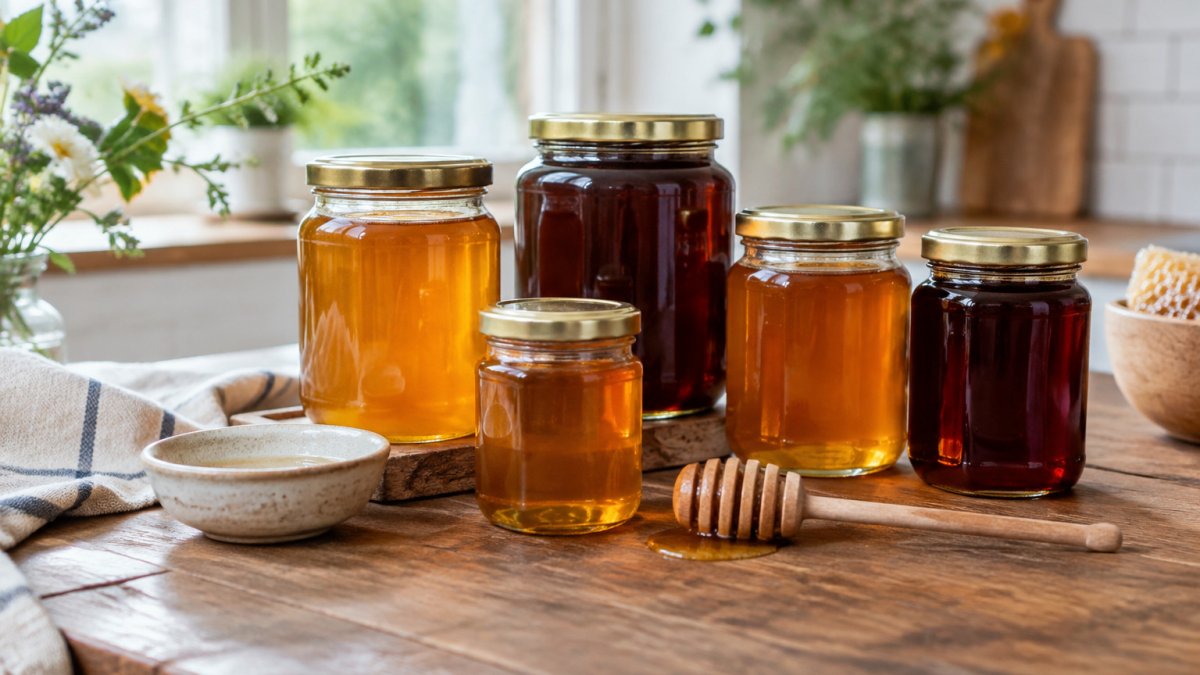
The practical difference between raw and pasteurised honey shows up in both taste and texture. Pasteurised honey is heated to keep it liquid for longer and to make it easier to filter, which removes some of the aromatic compounds and pollen that give raw honey its character. Raw honey is usually cloudier, can crystallise over time, and tends to carry a stronger, more layered flavour.
Crystallisation is the feature most people misread. It is a natural process in raw honey and does not mean the product has gone off. The speed depends on the balance of sugars, the temperature in your kitchen and the water content. Honeydew honeys, such as our Greek Pine and Greek Red Fir, tend to stay liquid longer than nectar honeys because of the sugar composition.
Many people in the UK buy pasteurised honey from supermarkets because it looks uniform and stays smooth on the shelf. The trade-off is that much of the variation a single origin provides is lost in processing. If your aim is to taste where the honey came from, raw is the better choice.
Comparing Our Raw Honey Range: Origin, Flavour and Price
Our current range covers honeys from Portugal and Greece, priced from £13.99 to £26.99. Each jar is sold as a single origin and is listed with its own flavour profile, so you can compare them directly. The table below summarises the key points.
| Honey | Origin | Floral or forage source | Raw status | Price |
|---|---|---|---|---|
| Algarvian Wild Lavender (Rosmaninho) | Algarve, Portugal | Wild lavender | Unheated, unfiltered | £25.99 |
| Algarvian Wildflower | Western Algarve, Portugal | Spring wildflowers | Unheated, unfiltered | £26.99 |
| Mirandela Chestnut | Mirandela, Portugal | Chestnut | Unheated, unfiltered | £26.99 |
| Greek Oregano and Lavender | Pelion, Greece | Oregano and lavender | Unheated, unfiltered | £14.99 |
| Portuguese Arbutus "Bitter" | Serra da Monchique, Portugal | Arbutus (strawberry tree) | Unheated, unfiltered | £14.99 |
| Algarvian Heather (Urze) | Algarve, Portugal | Heather | Unheated, unfiltered | £13.99 |
| Serra da Estrela Mountain | Guarda region, Portugal | Oak honeydew | Unheated, unfiltered | £26.99 |
| Silver Coast Eucalyptus | Silver Coast, Portugal | Eucalyptus | Unheated, unfiltered | £26.99 |
| Greek Red Fir | Central Greece | Fir honeydew | Unheated, unfiltered | £20.99 |
| Greek Pine (Evvia) | Evvia, Greece | Pine honeydew | Unheated, unfiltered | £20.99 |
Price
Arbutus honey is produced in limited quantities and not every year. Our Wild Lavender honey is a versatile everyday choice.
How to Read the Comparison
A consistent comparison framework matters more than any single number, because it lets you weigh the things that actually differ between jars.
- Raw status. Every jar in the range is unheated and unfiltered. That is the baseline, not a differentiator, so compare the other columns when choosing between them.
- Origin and forage source. A named region and a named floral or honeydew source tell you what the bees were likely to reach. This is the column that carries the most weight for a GMO-free claim.
- Price. Prices range from £13.99 to £26.99. The lower-priced jars are not lesser honeys; they reflect yield and how common the forage source is.
- Pack size and price per unit. Check the pack size on each product page before comparing prices, because a larger jar at a higher headline price can work out cheaper per 100g.
- Claim evidence. Look for the origin, the producer and the processing statement together. A jar that gives all three is giving you something you can check; a jar that gives none is asking for trust.
Best for: Shoppers who want to taste a specific region, not just a generic sweetness. Skip if: You only need honey for baking and do not mind a blended, uniform flavour.
Portuguese Single-Origin Varieties
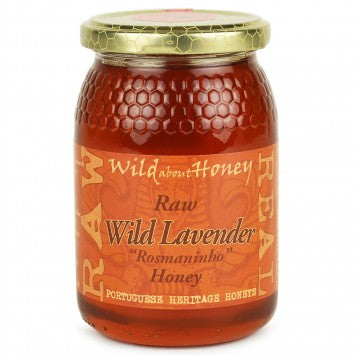
Our Portuguese honeys show how much a single landscape can change flavour. The Algarvian Wild Lavender, known locally as Rosmaninho, is a medium-sweet, delicate honey with an almost fruity finish. It is versatile enough to use every day on toast or in tea. Raw Algarvian Wild Lavender Honey - Rosmaninho - by Wild about Honey is a good starting point if you are new to single-origin honey.
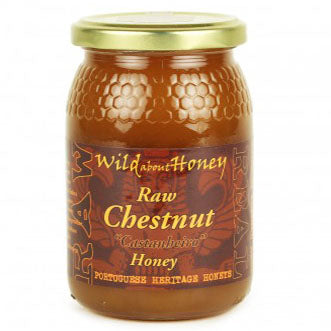
For a darker, more complex option, the Algarvian Wildflower is made from spring wildflowers across the western Algarve, with notes that shift from year to year. The Mirandela Chestnut has a nutty, slightly astringent profile that suits coffee and festive desserts, and it stays runny longer than most nectar honeys. You can also explore the Raw Chestnut Honey from the Mirandela Forests by Wild about Honey range.
Our Serra da Estrela Mountain honey is an oak honeydew from the Guarda region. It is rich, very dark and malty, and it is the honey we recommend to anyone who wants something intense.
Greek Honeydew and Pine Varieties
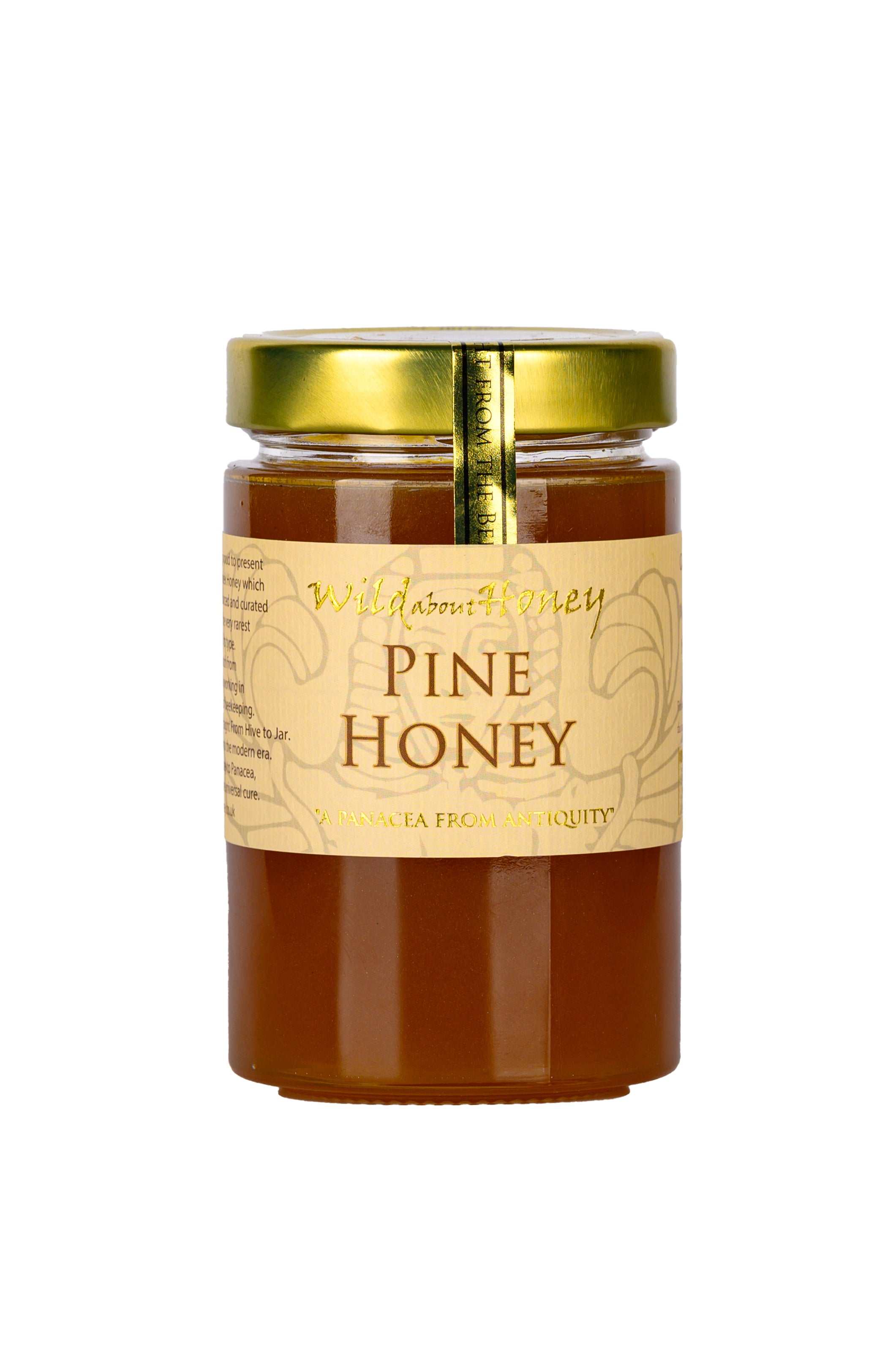
The Greek honeys bring a different character. Our Oregano and Lavender honey from Pelion is herby and aromatic, with a clean finish. The Greek Red Fir, from the mountains of central Greece, is a dark, smooth honeydew that many customers use daily. If you are comparing Greek pine honeys, the Raw Greek Pine honey from Evvia by Wild about Honey is a mild, smooth option gathered in August.
How to Spot Fake or Mislabelled Honey
Honey fraud is a concern, and the signs are not always obvious on the label. A useful rule is to be wary of very cheap "raw" honey with no origin, no producer and no batch information. Genuine raw honey usually has a traceable source, because the producers who take care over the product are proud to name it.
Look for these signals on the jar and the product page:
- A named country of origin, ideally a region or single source
- A producer or beekeeper you can identify
- A clear statement on processing, such as unheated and unfiltered
- Notes on crystallisation, which real raw honey will often have
Be cautious when a supermarket or marketplace listing describes honey as raw but gives no source. Food Standards Agency guidance on food fraud covers the wider issue of food authenticity and is a sensible reference if you want to read further.
Honey that stays perfectly smooth for a long time, or that has a uniform colour from jar to jar, may have been heated or blended. That does not prove fraud, but it is a reason to ask questions. Ask the seller where the honey came from and how it was processed, and expect a direct answer.
How to Store Raw Honey So It Keeps Its Character
Raw honey keeps very well when stored properly. Keep the jar tightly sealed, in a cool, dry cupboard away from direct sunlight, and avoid putting it in the fridge, which speeds up crystallisation. A stable room temperature preserves the flavour and aroma that make single-origin honey worth buying.
If your honey sets hard, you can loosen it gently. Stand the sealed jar in a pan of hand-hot water and stir occasionally until it softens. Avoid boiling water or a microwave, because overheating changes the flavour. Our product pages give the same advice, and it applies to every jar in the range.
Keep the honey away from moisture. A wet spoon introduces water, which can encourage fermentation over time. Use a dry spoon every time, and you will find the honey keeps its character for a long while.
Choosing the Right Raw Honey for Your Next Jar
Start with what you plan to do with the honey. For everyday use on toast, in porridge or in tea, a medium-sweet, easy-going honey such as the Wild Lavender or the Greek Oregano and Lavender works well. For dessert, glazes or coffee, the Chestnut and Eucalyptus honeys bring richer, nuttier notes. For a strong, bitter-sweet experience, the Arbutus is the one to try.
Then think about how much you want to spend and how often you will use it. The Heather and Oregano honeys sit at the lower end of the range, while the rarer varieties cost more because they are harder to harvest.
If you are buying for someone else, the Greek Red Fir and Greek Pine are good gift choices, since both are honeydews with a smooth, distinctive character. Whichever jar you choose, check the origin, the producer and the processing details first. Those three things tell you more about quality than any marketing line.
Frequently Asked Questions
How can you tell if raw honey is GMO-free?
Honey itself is not a genetically modified crop, so the question is really about whether the bees foraged on GM crops and whether the producer makes any verifiable claim. Look for a clear statement of floral and geographic origin, a named beekeeper or producer, and batch-level information. Wildabouthoney sources from independent master artisan beekeepers in Greece and Portugal and states its honeys are free from GMOs, antibiotics and additives. Ask for origin details if a label gives none.
Is all raw honey considered GMO-free?
Not automatically. Raw honey is unheated, unfiltered honey taken straight from the comb, but raw status does not confirm anything about GM exposure. Two raw honeys can come from very different landscapes and farming practices. The useful checks are where the honey was harvested, whether the source is traceable to a beekeeper, and whether the producer tests its products. Our range is hand-selected and lab tested for purity.
What is the difference between raw honey and commercial honey?
Commercial honey is often heated and filtered to slow crystallisation and give a clear, uniform appearance. That processing can reduce pollen content and some natural enzymes. Raw honey is extracted cold and left unfiltered, so it keeps more of its pollen, flavour complexity and natural character.
What should I look for on a honey label to ensure it is raw?
Look for the words raw or unfiltered, a stated origin country or region, and ideally a floral source such as lavender, heather or pine. Be cautious of labels that say only natural or pure, since neither term has a fixed meaning. Crystallisation is a sign of raw honey, not a fault. Wildabouthoney's jars state their origin and are described as 100% raw and cold extracted.


Comments on this post (0)