
Best Raw Honey for Digestion: Our Shortlist
Quick Summary
The best raw honey for digestion is one that is labelled 100% raw and unblended, names its beekeeper or region, and comes with lab testing. No honey is a proven digestive treatment, so choose a variety you enjoy and use it as part of a balanced diet.
- Raw honey is unheated and unfiltered, so pollen, enzymes and plant compounds remain.
- Check the label shows 100% raw, unblended and a single ingredient.
- Look for a producer who names the beekeeper or region and provides lab testing.
- One teaspoon contains around 5-6 g of sugar, so count it if watching intake.
- No strong evidence shows any particular time of day improves digestive benefit.
Table of Contents
- Choosing Raw Honey for Digestion: What to Look For
- Our Raw Honey Shortlist for Digestion (Compared)
- Taking Raw Honey for Gut Health: Dose, Timing and Limits
- Frequently Asked Questions
Choosing Raw Honey for Digestion: What to Look For
Raw honey is unheated and unfiltered, so pollen, enzymes and plant compounds remain. Check it is labelled 100% raw and unblended, the producer names the beekeeper or region, and it comes with testing. A guide to spotting lab-tested quality shows what to look for on the label. wildabouthoney's honeys are described as 100% raw, unblended and additive-free, and are lab tested for purity.
Floral source matters. Honeydew honeys such as pine and fir come from insect secretions on tree sap, not nectar. You can read what the tests show about supermarket honey to see how it compares with artisan jars. Pick a variety you enjoy, since you are more likely to use it daily.
Our Raw Honey Shortlist for Digestion (Compared)
No honey is a proven digestive treatment, so the aim is to help you choose intelligently.
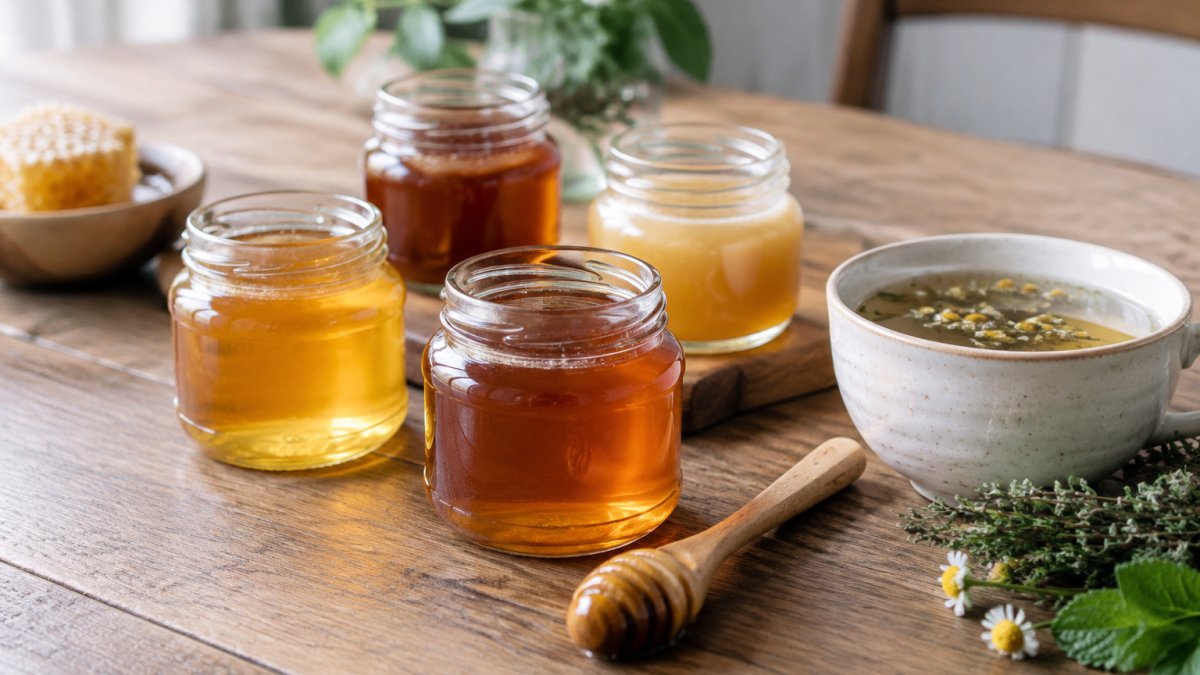
How we compared them
Much enthusiasm for the best raw honey for digestion comes from laboratory work showing it can inhibit certain bacteria and may act as a prebiotic. Human trials are far thinner, and almost none test a specific retail jar.
The shortlist
| Honey | Starting Price | Character | Evidence relevance | Best for |
|---|---|---|---|---|
| Raw Algarvian Wildflower Honey | £26.99 | Dark, complex, multifloral | Multifloral honeys are the most commonly studied for general prebiotic potential; laboratory evidence only | Everyday use |
| Raw Portuguese Arbutus "Bitter" Honey | £14.99 | Bitter-sweet, distinctive | Limited published digestive research; interest is mainly antibacterial in the laboratory | Adventurous palates |
| Raw Algarvian Heather Honey (Urze) | £13.99 | Smoky, rich, aromatic | Heather honey is traditionally associated with digestive comfort; evidence is largely anecdotal | Strong-flavour lovers |
| Raw Chestnut Honey | £26.99 | Nutty, slightly acidic | Dark honeys tend to carry higher antioxidant and antibacterial activity in laboratory tests | Coffee and tea |
| Raw Greek Red Fir Honey | £20.99 | Smooth, mild, herbaceous | Honeydew honeys are less studied for gut bacteria than floral honeys | Daily use |
| Raw Greek Pine Honey | £20.99 | Smooth, mild, honeydew | As above, honeydew, limited digestive-specific evidence | Versatile everyday use |
Starting Price
Which one to pick, by concern
A "raw" label alone does not guarantee quality. Check the ingredients list shows a single ingredient and that the producer is named.
Taking Raw Honey for Gut Health: Dose, Timing and Limits
This section gives realistic serving sizes, explains whether timing matters, and sets out limits by reader group.
How much, and how often
One teaspoon contains around 5-6 g of sugar, so two teaspoons adds roughly 10-12 g, worth counting if you are watching your intake.
Does timing matter?
There is no strong evidence any particular time of day improves digestive benefit. What matters is how you take it:
Condition-specific limits
Honey is not a proven treatment for any digestive condition, and the evidence differs by symptom:
Who should be careful
If you have a diagnosed digestive condition, are pregnant, or take medication, treat honey as a food rather than a remedy and get advice from your GP or a registered dietitian before making it a daily habit. The aim is to enjoy good honey as part of a balanced diet, not to treat a condition with it.
Frequently Asked Questions
Is raw honey good for digestion?
Raw honey is still a sugar, so it is best treated as a pleasant addition to a balanced diet rather than a treatment for digestive complaints. If symptoms persist, see a GP or pharmacist rather than relying on honey.
Is Mānuka honey better for digestion than other raw honey?
Mānuka honey is valued for its antibacterial activity, which is measured by a UMF or MGO rating, but that activity is not proven to improve digestion in healthy people. Check the rating on any Mānuka label before comparing prices.
How much raw honey should you take for gut health?
Because honey is high in sugar, people managing blood sugar or weight should keep portions small. Diabetics should speak to their doctor before using honey regularly,


Comments on this post (0)