
Why Is Supermarket Honey Fake? What the Tests Show
Last Updated: November 5, 2026
Quick Summary
Supermarket honey is sometimes fake because producers can dilute it with cheaper sugar syrups such as rice or corn syrup, which are hard to detect by taste. Long supply chains and blended, vaguely labelled origins make the jar hard to trace, and home tests cannot prove purity.
- Common adulterants are cheap sugar syrups such as rice or corn syrup.
- Long supply chains with many handlers make the honey's origin hard to trace.
- Blended honey is not automatically fake; a clear label matters most.
- Home tests like water, flame or thumb tests cannot prove purity.
- Only laboratory analysis reliably detects adulteration.
Table of Contents
- What Fake Honey Actually Means
- Why Supermarket Honey Is Hard to Verify
- What the Supermarket Honey Test Results Found
- How to Tell If Honey Is Pure at Home
- Raw Honey vs Processed Honey: What to Choose
- Choosing Honey You Can Trust Across Budgets
- Frequently Asked Questions
What Fake Honey Actually Means
Fake honey is a product sold as pure honey that has been diluted, mixed or replaced with cheaper sugar syrups. Many shoppers assume honey on a supermarket shelf is the real thing, but that is not always true.
The most common adulterants are cheap sugar syrups, such as rice or corn syrups, which cost less than honey and are hard to detect by taste alone. Some producers add them to stretch supply. Others blend honey from several countries and do not make the mix clear on the jar.
Pure honey comes straight from bees. It contains natural enzymes, pollen and trace compounds that syrups lack. That difference is what laboratory tests try to measure.
Why Supermarket Honey Is Hard to Verify
Supermarket honey often comes from long supply chains. A jar may pass through several packers, blenders and importers before it reaches the shelf. Each step makes it harder to trace where the honey really came from.
Labels can also hide the detail you want. A jar that says "blended honey" or "a blend of EU and non-EU honeys" may be perfectly legal, but it tells you very little about the origin of each part.
Here is what makes checking honey difficult:
- Long supply chains with many handlers
- Blended batches from several countries
- Vague origin wording on the label
- Lower-priced honey that can be mixed with syrup
- Limited tests on the shelf-level product
What Supermarket Labels Legally Mean
In the UK, honey is sold under food labelling rules. These set out how the product must be described. A label that says "honey" means the product is supposed to be honey, not syrup, but the rules do not guarantee that every jar has been tested.
Origin wording is where confusion often starts. A label naming several countries may simply list where the honey was sourced. Read the front and back of the jar carefully, and check whether the origin is given as a country, a region or a blend. Because origin wording can be just as important on organic products, check organic labels alongside the country or region named on the jar.
If you think a label is misleading, you can report it to your local trading standards team (Report misleading labelling).
Blended and Non-UK Origin Honey
Blended honey is not automatically fake. Many blends are sold openly and are made from honey that is genuinely honey. The problem arises when a label hides what is in the blend or implies a single origin that does not match the contents.
When you see a non-UK origin, that is not a warning sign on its own. Honey is traded worldwide. What matters is whether the label is clear and whether the producer can trace the supply.
What the Supermarket Honey Test Results Found
The results usually focus on a sample of products rather than the whole market. A tested sample can show a pattern, but it cannot tell you the status of a particular jar you have at home.
Be careful with headlines. A report that says "fake honey found on shelves" may refer to a small number of samples from specific brands or batches.
How Laboratory Testing Detects Adulteration
Other tests look at the sugar profile, enzymes and other markers. Together, these results show whether a sample is consistent with pure honey.
Raw Algarvian Wildflower Honey By Wild about Honey →
How to Tell If Honey Is Pure at Home
Home checks can help you spot obvious problems, but they cannot prove a honey is pure. The popular tests circulating online are not reliable substitutes for laboratory analysis, and treating them as verdicts is the fastest way to be misled in either direction.
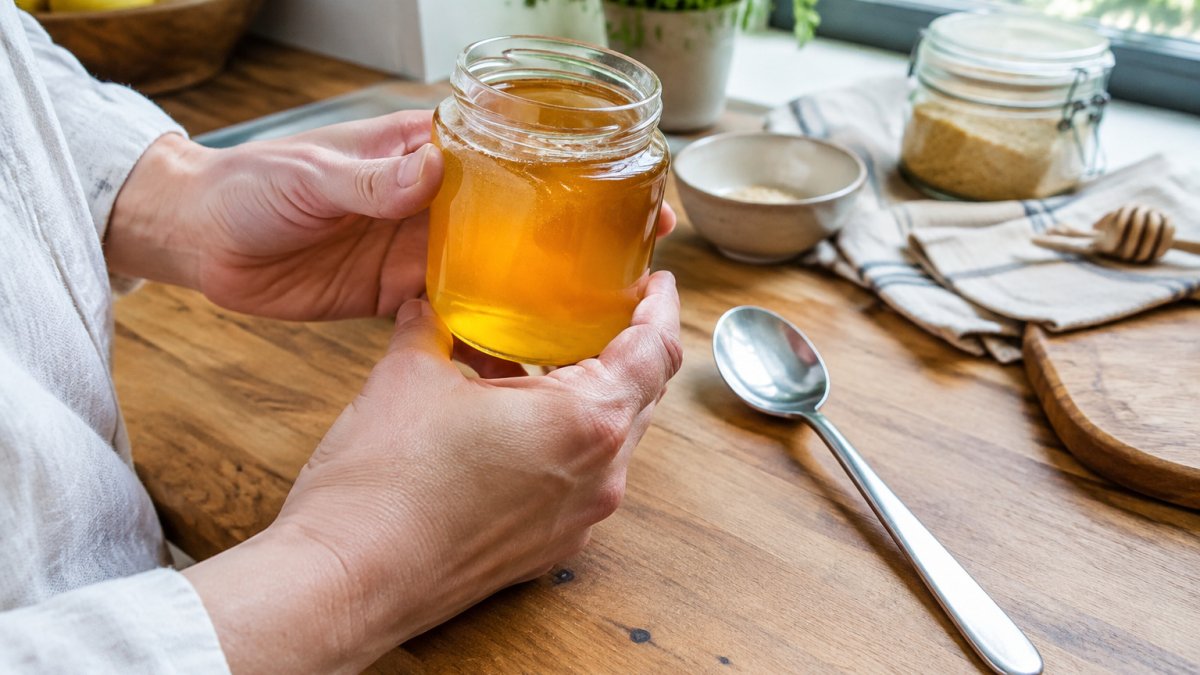
Why the common home tests fall short:
- The water test. The claim is that pure honey sinks and fake honey dissolves. In practice, a thick, low-moisture honey may sink while a genuinely pure honey with higher moisture content can begin to dissolve. Neither outcome proves adulteration.
- The flame test. The idea that pure honey burns and diluted honey does not is unreliable. Moisture content, sugar composition and even the wick material all affect how a sample burns, so a match test tells you almost nothing about authenticity.
- The thumb test. Honey that holds its shape on your thumb is said to be pure. Viscosity varies naturally with temperature, floral source and moisture, so this test confuses texture with provenance.
- The taste test. Adulterated honey is specifically designed to taste like honey. Cheap syrups are chosen because they mimic sweetness and mouthfeel, so your palate is the last instrument to catch a well-made blend.
- The crystallisation test. Genuine raw honey often crystallises over time, but so can syrups, and some pure honeys resist crystallisation for years. Crystallisation is a natural variation, not a purity signal.
What home checks can realistically do:
- Flag obvious quality problems such as fermentation, off-odours or excessive foam
- Help you compare texture and aroma between jars you already trust
- Prompt you to read the label more carefully before buying again
Watch out: a home test that appears to "fail" a jar is not evidence of fraud, and a home test that appears to "pass" is not evidence of purity. The only reliable way to detect adulteration is laboratory analysis, which is why enforcement bodies rely on it rather than kitchen experiments.
If you want to reduce risk without a lab, focus on what you can verify: a named producer, a clear origin, a traceable supply chain and a seller willing to answer questions. Those signals are imperfect, but they are far stronger than a water glass or a lighter.
Raw Honey vs Processed Honey: What to Choose
Raw honey is typically strained but not heated to high temperatures or heavily filtered. Neither type is automatically fake, but raw honey usually gives you more information about its origin and handling.
Processed honey can still be genuine. The difference is mainly in what it keeps and how clearly it is labelled. If you want to explore the differences in taste and quality between honey varieties, our Artisan Greek Honey Tasting Notes: A Connoisseur's Guide covers how they compare in practice.
Here is a quick comparison to help you decide:
| Feature | Raw Honey | Processed Honey |
|---|---|---|
| Heating | Minimal | Often heated |
| Filtration | Light straining | Fine filtering |
| Pollen and enzymes | Usually kept | Often reduced |
| Traceability | Often clearer | Varies by brand |
Choosing Honey You Can Trust Across Budgets
You do not need to spend a fortune to buy honey you can trust. You do need to look past the price tag and check the label, the origin and the seller's transparency.
At wildabouthoney, we select raw honeys from independent master artisan beekeepers in Portugal. For an everyday option, our Raw Algarvian Wildflower Honey is a 100% raw, unfiltered wildflower honey priced at £26.99 for 1 kilo. For a distinctive choice, the Raw Algarvian Wild Lavender Honey - Rosmaninho costs £25.99 for 1 kilo. If you want something distinctive from a named region, the Raw Portuguese Arbutus "Bitter" Honey is priced at £14.99 for 1 kilo.


Whichever you choose, check the label, ask where the honey came from, and look for a seller who can show you the source. That is the most reliable way to avoid fake honey, whatever the price.
Frequently Asked Questions
Is supermarket honey real honey?
Most supermarket honey is real honey, but some has been blended with cheaper sugar syrups or made from honey of mixed origin. Checking the label for origin wording, reading the producer details, and choosing products with clear traceability gives you a better basis for judging what you are buying.
Can you test honey for purity at home?
Home checks can give only a rough first impression, not proof either way. Reliable detection of syrup adulteration needs laboratory analysis.
Does crystallised honey mean it is genuine?
Crystallisation is a natural process that affects raw honey as well as processed honey, depending on its sugar balance, temperature and water content. Crystallised honey is not proof of authenticity, and runny honey is not proof of fraud. Look at the labelling, origin and producer information instead of relying on texture alone.
What should I look for on a honey label?
Check the country of origin wording, whether the product is described as blended, and whether there is a named producer or batch information. Terms like raw or unfiltered describe processing, while origin statements show where the honey was harvested. Vague labels that list several countries or only a packer's name make it harder to verify the product's history.


Comments on this post (0)