
How to Store Raw Honey Properly at Home
Quick Summary
To store raw honey properly, keep the jar tightly closed in a cool, dry, dark cupboard at normal room temperature, away from heat, light and moisture. Raw honey does not need refrigeration, and crystallisation is normal and harmless.
- Keep the lid tightly closed after every use.
- Store the jar in a cool, dry, dark cupboard or pantry.
- Do not refrigerate raw honey; room temperature is suitable.
- Always use a clean, dry spoon to avoid introducing water.
- Gently warm crystallised honey in water below boiling, never in a microwave.
Table of Contents
- Why Raw Honey Needs Careful Storage
- Choosing the Right Spot: Temperature, Light and Humidity
- Does Honey Need to Be Refrigerated?
- Best Container for Honey Storage
- How Long Does Raw Honey Last?
- Crystallisation: What It Means and How to Decrystallise Honey
- Keeping Your Raw Honey Jar in Its Best Condition
- Frequently Asked Questions
Why Raw Honey Needs Careful Storage
Last Updated: November 10, 2026
Raw honey lasts for years when you store raw honey properly, but a few simple mistakes can spoil its flavour and texture. This guide shows you how to store raw honey properly at home, so every spoonful tastes the way the beekeeper intended.
Raw honey is unheated and unfiltered. That makes it richer in flavour and natural compounds, but it also means it reacts more to its surroundings. Heat, light, moisture and temperature swings all affect the jar.
Here is what matters most:
- Keep the lid tightly closed after every use
- Store the jar somewhere cool, dry and dark
- Keep moisture and water away from the honey
- Expect crystallisation, which is normal and harmless
Raw honey is hygroscopic, which means it pulls water from the air. Too much moisture can change its taste and encourage fermentation. Good storage protects the honey you paid for.
Choosing the Right Spot: Temperature, Light and Humidity
The best place for raw honey is a spot that stays cool, steady and dry. A cool, steady room temperature is a sensible target. Honey does not have a hard cut-off where it suddenly spoils, so the trade-offs are gradual.
Warmer storage speeds up the slow chemical changes that darken colour and mellow flavour. Heat also breaks down some of the enzymes and volatile aroma compounds that make raw honey distinctive, which is why a jar kept near a radiator often tastes flatter after a year than one kept in a cupboard. Cooler storage slows these changes but encourages crystallisation, so if your honey tends to set quickly you may prefer a stable mid-range spot rather than the coldest shelf in the house.
Light is a secondary concern. Keeping the jar out of direct sunlight in a dim cupboard or pantry is a sensible precaution.
Keeping the lid closed helps protect honey from moisture in the air, as honey can absorb water from humid surroundings.
Placement checklist:
- Choose a shelf that stays stable through the day rather than one that warms and cools sharply
- Keep the jar in a dark cupboard or pantry, away from the hob, oven and dishwasher
- In humid kitchens, store the jar away from the sink and reseal the lid immediately after every use
- In hot climates, prioritise a cool interior cupboard over any room with direct heat exposure
- For bulk quantities, keep the unopened containers in the coolest, driest spot and decant only what you will use within a few months
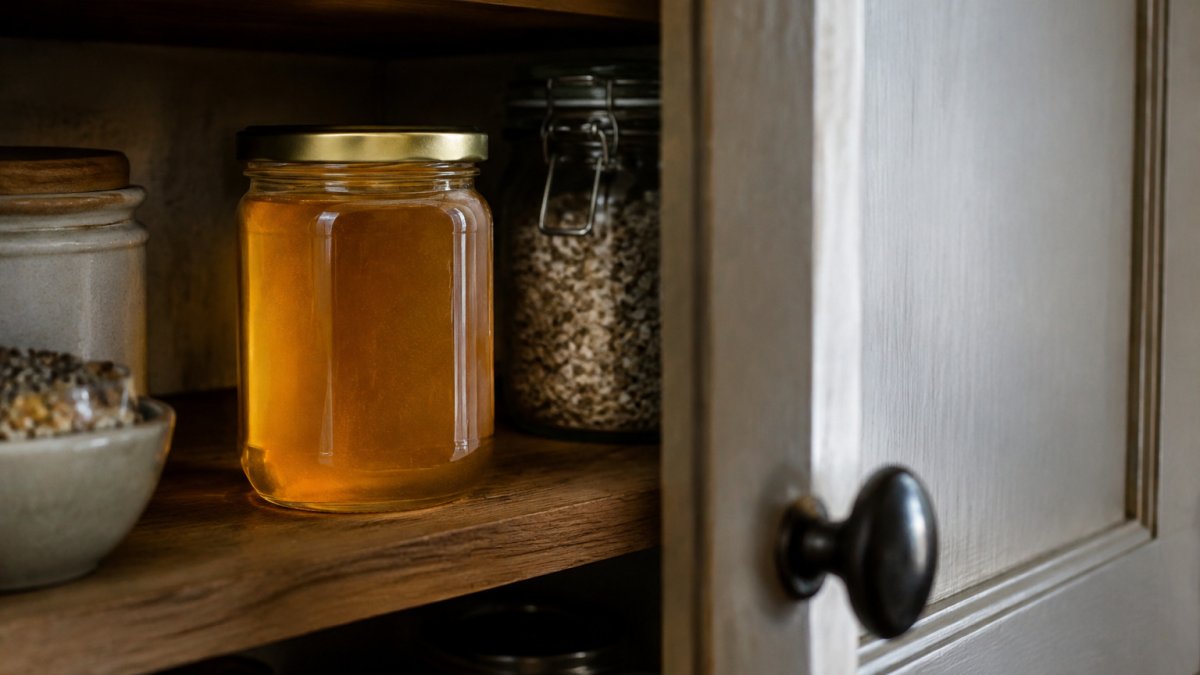
!Image: A jar of golden raw honey standing on a wooden pantry shelf in a cool, dim kitchen cupboard, with a closed door slightly ajar
Does Honey Need to Be Refrigerated?
No, raw honey does not need to be refrigerated. A pantry or cupboard at normal room temperature is a suitable home for honey.
Keep your honey at room temperature and you will get the best flavour and texture from each jar.
Best Container for Honey Storage
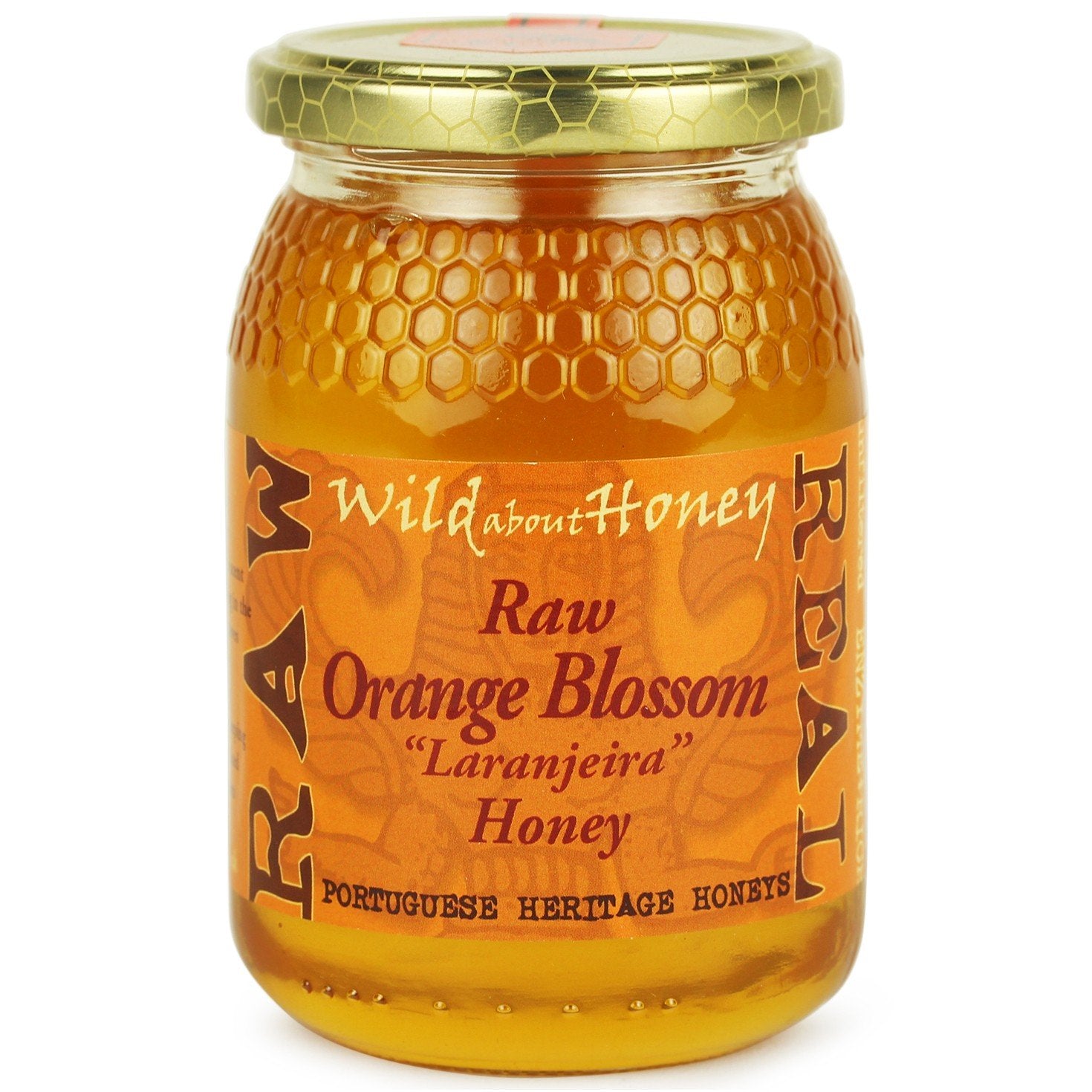
Keep honey in its original jar where possible, or transfer it to a clean, food-safe container with a tight lid. You can compare sizes and packaging for raw Algarvian orange blossom honey before choosing a jar.
Use these guidelines:
- Glass jars: Best for everyday storage and keep flavour unchanged
- Food-safe plastic: Fine for transferring honey or bulk storage, but check it is food-grade
- Metal containers: Avoid these, because honey can react with some metals
- Any container: Make sure it is clean, dry and has a tight-fitting lid
When transferring honey, use a clean, dry spoon. Water or crumbs can start fermentation. Seal the container straight after use.
How Long Does Raw Honey Last?
Raw honey can keep for a long time when stored correctly.
If honey smells sour, shows bubbles or foam, or has an unusually thin texture, do not eat it.
Crystallisation: What It Means and How to Decrystallise Honey
Crystallisation happens when glucose separates out of the honey and forms solid crystals, leaving a thicker, paler, grainier texture. It is a natural process that occurs with raw honey. The speed and size of the crystals depend on the balance of sugars, ambient temperature and water content.
Because crystallisation is harmless, many people leave honey set and simply scoop it out. If you want it runny again, the goal is to dissolve the crystals gently, without driving the temperature high enough to damage flavour and enzymes.
A gentle method:
- Remove the lid and stand the jar, with its lid off or loosely placed, in a pan of warm water that feels comfortable on your hand. Keep the water well below boiling.
- Leave it for 15 to 20 minutes, stirring occasionally with a clean, dry spoon to help crystals dissolve evenly.
- Check the texture. If it is still grainy, repeat in short intervals rather than leaving the jar in very hot water for longer.
- Dry the outside of the jar thoroughly before returning it to storage, so no water can run under the lid.
Watch out: Microwaving honey creates uneven hot spots that can scorch the honey and degrade its natural compounds, so use the warm-water method instead.
Watch out: Water that enters the jar during warming can start fermentation later, so make sure the lid is tightly closed only once the jar is fully dry and at room temperature.
Crystallisation is harmless, and the article gives a gentle way to bring a set jar back to a runny texture.
| Step | What to do | Time or frequency |
|---|---|---|
| Warm the jar | Stand it in warm water, well below boiling | 15 to 20 minutes |
| Stir | Use a clean, dry spoon to dissolve crystals | Occasionally, during warming |
| Check texture | If still grainy, repeat in short intervals | Short intervals |
| Dry the jar | Dry the outside thoroughly before storing | Before resealing |
| Avoid | Microwaving, which causes hot spots and scorching | Never |
Keeping Your Raw Honey Jar in Its Best Condition
Good habits keep your honey tasting fresh for years. Make storage part of your routine.
- Close the lid tightly after every use
- Use a clean, dry spoon each time
- Store the jar in its cool, dark spot
- Check the seal now and then
- Keep a note of when you opened the jar
Common Storage Mistakes to Avoid
A common mistake is dipping a wet spoon into the jar, as water can mix with the honey. Leaving the lid loose also lets moisture in.
Some people also store honey next to strong spices or cleaning products. Honey can pick up smells, so keep it in a clean, sealed container away from them.
Avoid heating honey quickly, as strong heat can affect its delicate flavour.
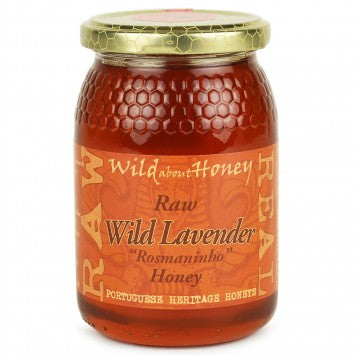
If you want to try different honeys, our Raw Algarvian Wild Lavender Honey - Rosmaninho is a medium-sweet, floral honey. Once your jar is set, our guide on crystallisation and how to decrystallise honey explains what to expect.
Food Standards Agency guidance on food storage
Frequently Asked Questions
How should you store raw honey?
Keep raw honey tightly sealed in its original jar or a food-safe glass container, in a cool, dry, dark cupboard away from direct sunlight. Always use a clean, dry spoon so moisture and crumbs cannot get in.
Does raw honey need to be refrigerated?
No. Refrigeration is not needed for raw honey. A cool cupboard at normal room temperature is a suitable place to keep it.
Is crystallised raw honey still safe to eat?
Yes. Crystallisation is a natural process that happens to all raw honey and does not mean the honey has gone off. The speed and size of the crystals depend on the balance of sugars, the ambient temperature and the water content. Crystallised honey is safe to eat and can be gently softened to a runny state if you prefer it that way.
How do you return crystallised honey to a runny consistency?
Stand the jar in a pan of hand-hot water, not boiling, and repeat as necessary until the honey loosens. Avoid microwaving, as it can overheat the honey.


Comments on this post (0)