
How to Identify Raw Unblended Honey: A Buyer's Guide
Last Updated: November 22, 2026
Quick Summary
To identify raw unblended honey, check the label for a named origin, floral source, batch or harvest reference and producer, since unblended honey comes from one beekeeper, one floral source and one harvest. No kitchen test proves a honey is unblended, but a spoonful that sinks and settles as a lump, honey that granulates over time and a floral aroma released on warming are useful checks.
- Raw honey has not been heated above roughly 40°C, while unblended honey comes from one origin, one harvest and one producer.
- A producer can gently warm a blend of three countries' honey and still call it raw.
- Pure is a legal baseline, not a mark of quality, and does not guarantee raw or unblended honey.
- Raw honey crystallises over time, which is a good sign rather than a fault.
- If your jar goes solid, stand it in a pan of hand-hot water and stir with a warmed spoon.
Table of Contents
- Why Raw Unblended Honey Is Harder to Spot Than You Think
- How to Tell If Honey Is Pure: A Step-by-Step Testing Guide
- Reading Raw Honey Labels: What to Look For and What to Ignore
- What "Unblended" Actually Means, and How It Differs from Raw, Pure and Unfiltered
- Does Raw Honey Crystallise, and Why That Matters
- Why Raw Unblended Honey Is Harder to Spot Than You Think
- The Bottom Line on Buying Raw Unblended Honey
- Frequently Asked Questions
Why Raw Unblended Honey Is Harder to Spot Than You Think
"Raw" has no legal definition in the UK, and "unblended" is a sourcing claim you cannot see in the jar. At wildabouthoney, we source our honey from independent master artisan beekeepers in Portugal and Greece.
How to Tell If Honey Is Pure: A Step-by-Step Testing Guide
No kitchen test proves a honey is unblended, but these checks flag obvious fakes: a spoonful should sink and settle as a lump, and real honey often falls in one slow thread. Real honey granulates over time, and warming the jar should release its floral source.
Reading Raw Honey Labels: What to Look For and What to Ignore
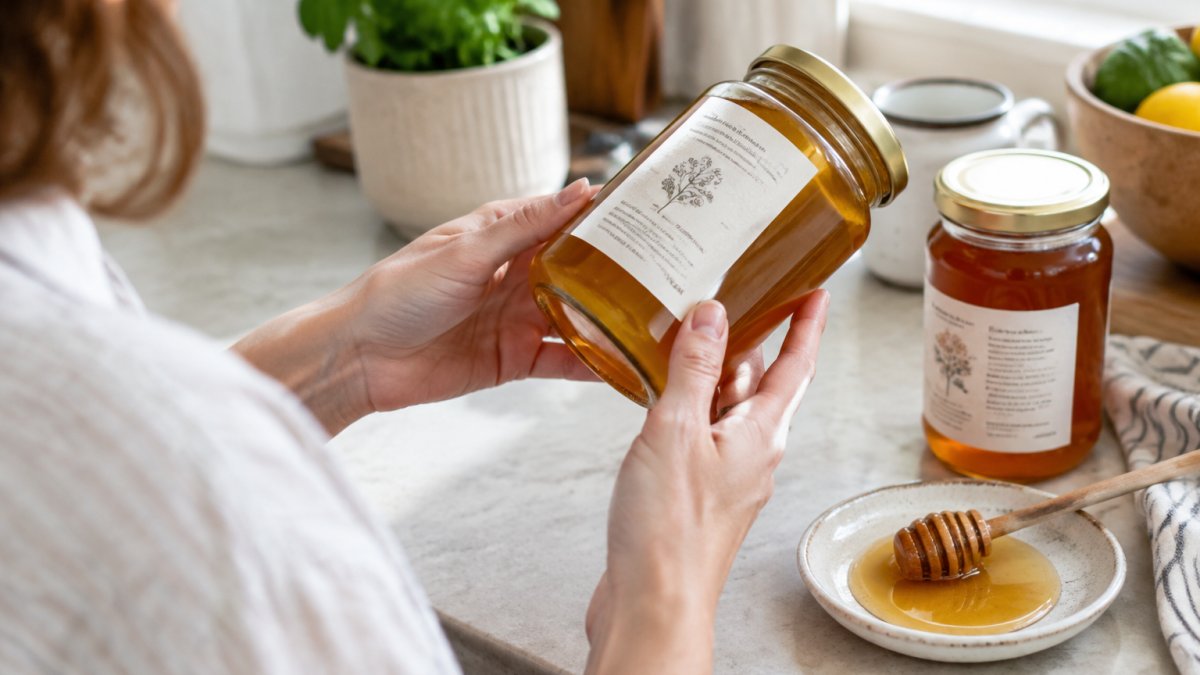
Look for a named origin, floral source, batch or harvest reference and producer.
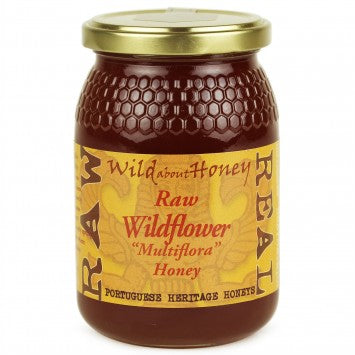
"Pure" is a legal baseline, not a mark of quality. "Unblended" means a single source, so a jar labelled that way should name one origin and one harvest. This raw Algarvian wildflower honey shows how a single-origin jar reads, and our guide to whether premium honey is worth the price covers what you are paying for.
What "Unblended" Actually Means, and How It Differs from Raw, Pure and Unfiltered
Unblended honey comes from one source: one beekeeper, one floral source, one harvest. Raw honey has not been heated above roughly 40°C. Pure honey contains nothing but honey. Unfiltered honey has not passed through a fine filter.
| Term | What it means | What it does not guarantee |
|---|---|---|
| Raw | Not heated above roughly 40°C | Single origin |
| Unblended | One origin, one harvest, one producer | Raw or unfiltered |
| Organic | Meets organic certification rules (Organic food: labelling and advertising rules) | Raw or unblended |
The gap most buyers miss is between raw and unblended. A producer can gently warm a blend of three countries' honey and still call it raw.
Does Raw Honey Crystallise, and Why That Matters
Yes, raw honey crystallises, and that is a good sign rather than a fault. If your jar goes solid, stand it in a pan of hand-hot water and stir with a warmed spoon.
Why Raw Unblended Honey Is Harder to Spot Than You Think
The hardest part is that blending is invisible. Two honeys from different countries can be mixed, gently warmed and jarred, and the result looks and tastes entirely plausible. Our piece on how to spot lab-tested quality walks through genuine testing, and what supermarket honey tests reveal shows why the problem is so widespread.
The Bottom Line on Buying Raw Unblended Honey
Buying well comes down to evidence, not appearance. A honey that names its beekeeper and its harvest is making a promise you can hold it to.
Most honey on a supermarket shelf cannot tell you where it came from. We built wildabouthoney to fix that, sourcing 100% raw, unblended heritage honey from independent master artisan beekeepers in Portugal and Greece. Every jar is hand-selected, lab tested for purity, and free from GMOs, antibiotics and additives, with multiple Great Taste awards behind the range. Start with our Raw Algarvian Wildflower Honey at £26.99 and taste what a single-origin harvest actually does.
Frequently Asked Questions
How can you tell whether honey is pure or blended?
No kitchen test proves it. The label is your first check: look for a named origin and floral source, a single-source claim and a batch number. Blended honey is usually labelled as a blend of EU and non-EU honeys, which tells you nothing about where it came from. For certainty, look for honey that has been lab tested for purity. Appearance, colour and the drip test cannot confirm a honey is unblended, so treat them as clues rather than proof.
Does raw honey always crystallise?
All raw honey crystallises eventually, but the speed varies with its sugar balance, water content and storage temperature. Honey rich in glucose sets quickly, sometimes within weeks, while high-fructose honeys stay runny for months. A jar that never sets over years is worth questioning, but slow crystallisation alone is not evidence of processing. Warming a set jar in hand-hot water loosens it without spoiling the honey.
Do home tests reliably prove that honey is raw?
The popular tests, such as the drip test, the thumb test or mixing honey into water, only show thickness and moisture, not whether the honey was heated or blended. Adulteration with syrup can pass them. The reliable route is laboratory testing for pollen, sugar profiles and adulteration markers, plus a traceable supply chain. Use home tests to enjoy your honey, not to certify it.


Comments on this post (0)